

Shaping urban identity through façade design and innovation

28 Dec 2020
Article for Urban Zen.
Photography by Ricken Desai
Featured in Architect & Interiors , Construction Times , Silicon India Start Up City , MGS Architecture , Construction World.
Façade designing is a battle against all the factors of urban design and function it serves to the structure. When ideating on a design narrative or ideology it’s important to focus on a three point approach: form follows function, form follows fiction (narrative) and finally form follows finance. The functionality of the concept, the story it narrates and the financial scope it entails to bring it to fruition are the three prongs on which design and innovation stand.

Climate studies help us align landscape and built environments so that their orientations are more conducive to energy and resource conservation. Under unfavorable conditions, physical intervention is required to have the desired result with energy savings, micro-climates and the general well-being of inhabitants. Saving energy doesn’t necessarily mean the complete stoppage of usage. The right materials and the right design will help us achieve far more optimal results and savings.

For instance, in a recent Hyderabad based master plan development project, the climate study displayed heat signatures across the central landscape pavilion to be consistent throughout the year. The study also showed that despite popular belief a comfort quotient of between 65-75 degrees Fahrenheit is achieved only between November and January. The radiance analysis showed that almost 20-40% of the floor plate is penetrated by the summer and winter sun leading to significant heat and glare. The wind path study also enabled us to know that the maximum wind flow was from east to west or west to east.

The current tower placement obstructed the wind path and the purpose of wind towers between blocks was negated with the absence of wind penetrating such cores. As a result, several possible physical interventions to enable a more innovative and climate friendly façade were proposed. Some of these were inclined fins, light shelves, ventilation slots, biophilic screening and venturi controls. Mental calisthenics are not necessarily the need of the hour. The urge to not only think out of the box but also to reshape the box is.
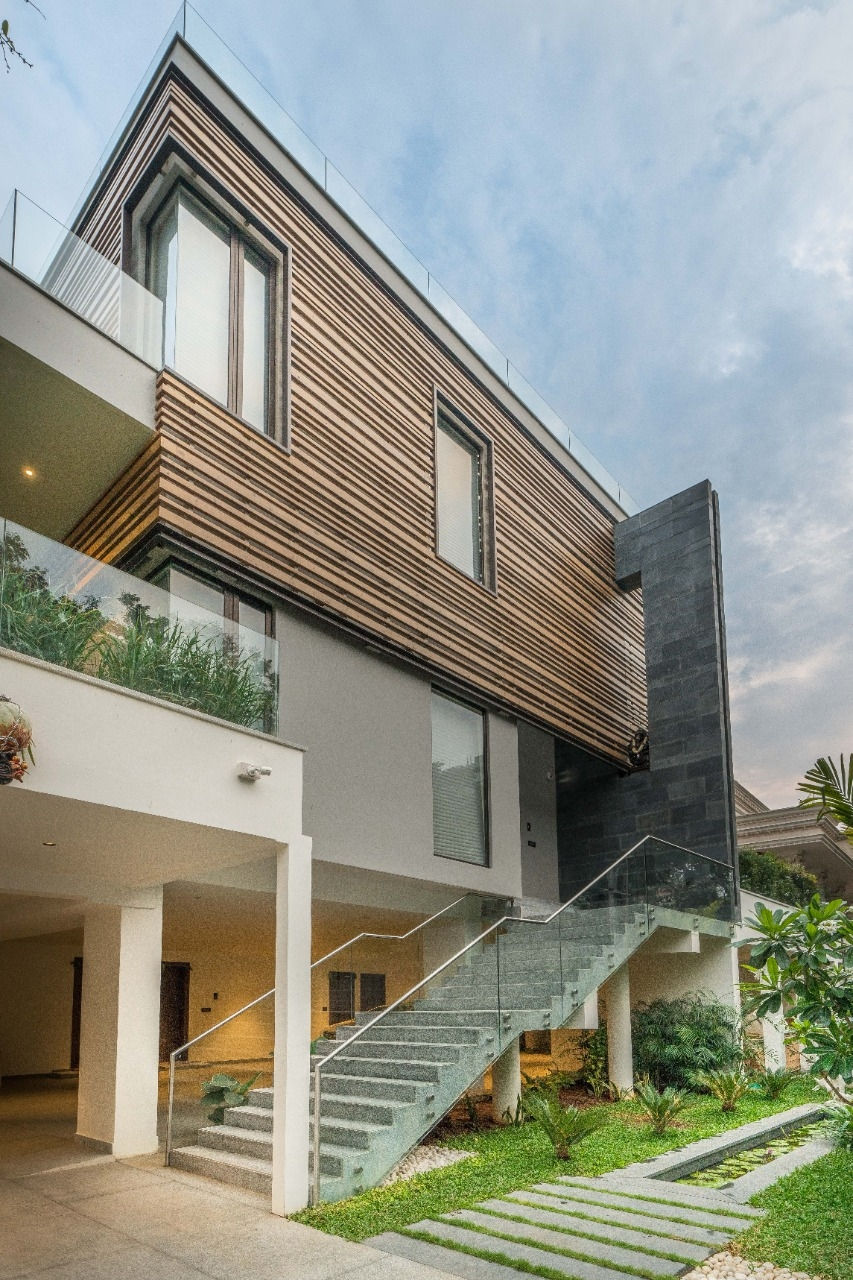
As designers of the population’s built environments, we must look to ideate, design and shape our façades and consecutively our community and the world it inhabits in the most meaningful, sustainable and functional way possible.
