

Designing for Change: Architecting a Sustainable Future Amidst Climate Crisis
In the intricate tapestry of design, the threads of creativity and problem-solving converge to weave solutions for the challenges that define our era. At the forefront of these challenges stands climate change - an urgent global issue that demands the attention and innovation of the design community. This article delves into the pivotal role of designers in addressing climate change, emphasizing responsibility, innovation, and conscious decision-making as essential tools to reshape our world.

The Design Imperative: Solving the Climate Crisis:
Design, at its core, is a mechanism to solve problems. As we confront the monumental challenge of climate change, the notion takes on a profound significance. This crisis, with its far-reaching ecological and societal ramifications, beckons designers to rise as leaders of change, channelling their expertise to create sustainable solutions that combat environmental degradation.

Acknowledging Reality: The Urgency of Climate Change:
The unequivocal reality of climate change cannot be denied. It transcends political borders and socioeconomic divisions, affecting all aspects of life on Earth. The pressing need for action reverberates through every design decision, every blueprint, and every creation. Designers wield the power to either perpetuate or relieve this crisis.

Designing Responsibly: A Shared Responsibility:
In the realm of design, culpability is not the focus, but responsibility certainly is. Designers are not to blame for the climate crisis, yet they bear the weight of shaping its course. The ethical imperative emerges – designers are entrusted with the task of conceiving solutions that embody sustainability, resilience, and ecological consciousness.
Beyond Material Existence: Rethinking Design Philosophy:
The essence of design transcends physicality. A thought-provoking question surfaces: Must a design exist as a tangible entity, or can it be encapsulated in alternate forms that deliver value and function? This inquiry challenges conventional norms, encouraging a paradigm shift towards designs that embrace virtual, digital, or ephemeral formats, minimizing material consumption.

Pillars of Sustainable Design:
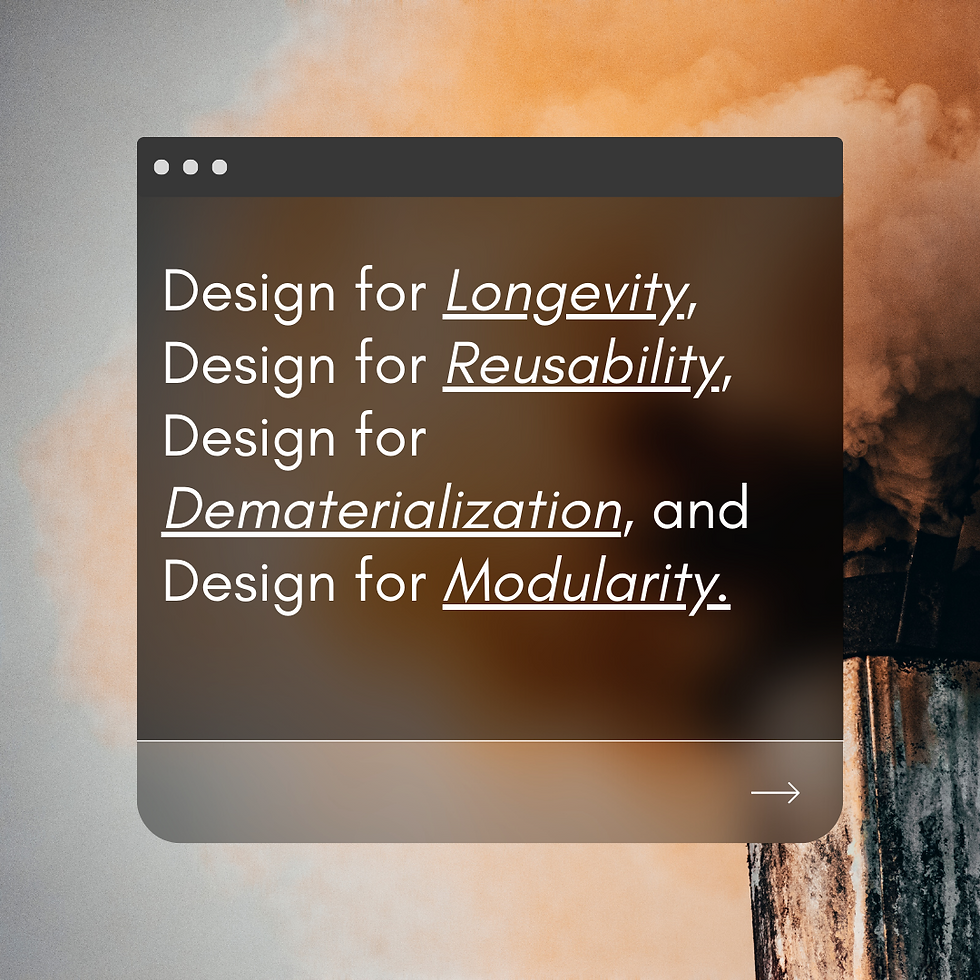
Four pillars stand as beacons guiding the path toward sustainable design:
Design for Longevity: Crafting enduring designs that defy the transient nature of consumer culture, inspiring creations that remain relevant and functional across generations.
Design for Reusability: Embracing modularity and adaptability, envisioning designs where components find new life in different contexts, reducing waste and embracing circularity.
Design for Dematerialization: Championing designs that achieve more with less, creating impactful solutions that minimize material usage without compromising quality or utility.
Design for Modularity: Celebrating flexible, modular designs that can evolve with changing needs, promoting longevity and minimizing resource depletion.
Cultural Wisdom and Collaboration:
Indigenous cultures hold profound ecological knowledge. Recognizing and incorporating these time-honoured insights enriches the tapestry of sustainable design, fostering a holistic approach that harmonizes human creativity with the rhythms of nature.

Countering Hyper-Consumerism:
The prevailing culture of hyper-consumerism fuels the climate crisis. Designers, armed with the ability to shape consumer behaviour, are positioned to encourage responsible consumption and conscious decision-making. By creating designs that inspire mindful choices, designers can shift societal paradigms.
Bio-Fabrication: A Path to Revolution:
Bio-fabrication emerges as an avenue of transformation. The marriage of biology and design redefines the possibilities of sustainable product and concept creation. Harnessing natural processes, designers usher in an era of innovation that aligns seamlessly with ecological principles.

Transforming Waste into Wonders:
In the pursuit of sustainable design, waste is not an end, but a beginning. Innovative projects that upcycle waste materials into high-value products highlight the potential of resourcefulness. These endeavours reimagine waste as a valuable resource, challenging preconceived notions and contributing to a circular economy.
As a new era defined by climate challenges, designers occupy centre stage, equipped with the tools to shape a sustainable future. The nexus between design and climate change beckons for responsible, visionary, and innovative approaches. In this endeavour, designers forge not only structures and products but also a path to global transformation - one blueprint at a time. Sources:


Comments